

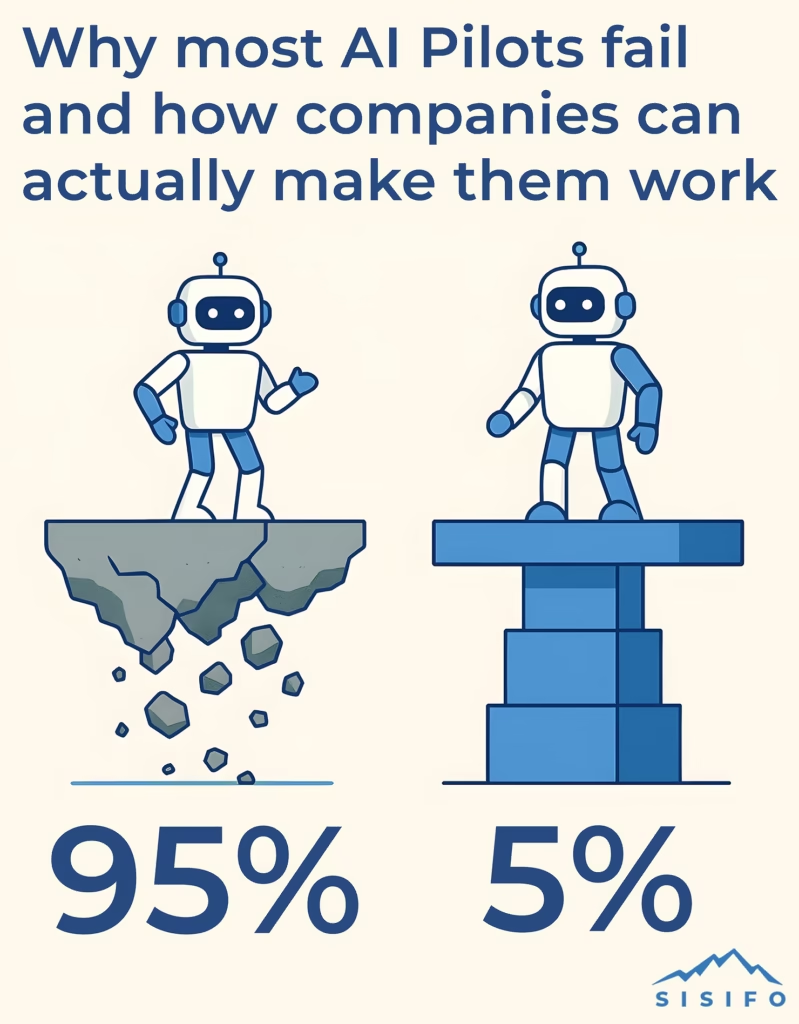
Most companies experimenting with generative AI are running into the same wall: their pilots look impressive in demos but fail to deliver value in real operations. According to a recent MIT study, only 5% of GenAI pilots make it past the prototype phase.
The surprising truth is that these failures aren’t caused by “bad AI.” They happen because teams try to build quick chat-based tools instead of fully integrated systems that align with the way the business actually runs.
This article breaks down why most pilots fail, what the successful 5% do differently, and how companies can adopt a more grounded, realistic approach to implementing AI.
The Real Reason Most GenAI Pilots Fail
MIT describes the issue as a “GenAI Divide”: On one side are the projects that never scale and on the other are the few that do.
The pilots that fail usually share the same traits:
1. They’re built as simple chat “wrappers”
Many pilots add a chat interface on top of a large language model.
These tools look great in a demo, but they collapse when they touch real data, real workflows, or real decision-making.
Why wrappers fail:
- They don’t use the company’s internal data.
- They can’t match the metrics executives trust (Excel, Power BI, Tableau).
- They can’t integrate into existing workflows.
- If the only differentiation is “UI + GPT,” new model releases erase whatever value was built.
A system that anyone could rebuild over a weekend will not produce ROI.
2. They don’t speak the same “truth” as the business
Executives rely on established dashboards, validated reports, and approved KPIs.
If the AI gives output that contradicts those numbers, trust disappears instantly.
This creates what MIT calls the “Distrust Gap”. Once that gap widens, adoption dies.
3. They can’t handle friction
MIT found that the GenAI pilots that fail are the ones that try to remove all friction instead of designing for it. Real business use cases require:
- memory
- context
- human feedback loops
- workflow changes
- data governance
- alignment with compliance and reporting
If a pilot avoids these realities, it won’t scale.
What the Successful 5% Do Differently
The companies that succeed, approach AI like a long-term system, not a quick experiment.
They focus on structure, learning, and integration.
We believe that the winners follow a consistent pattern:
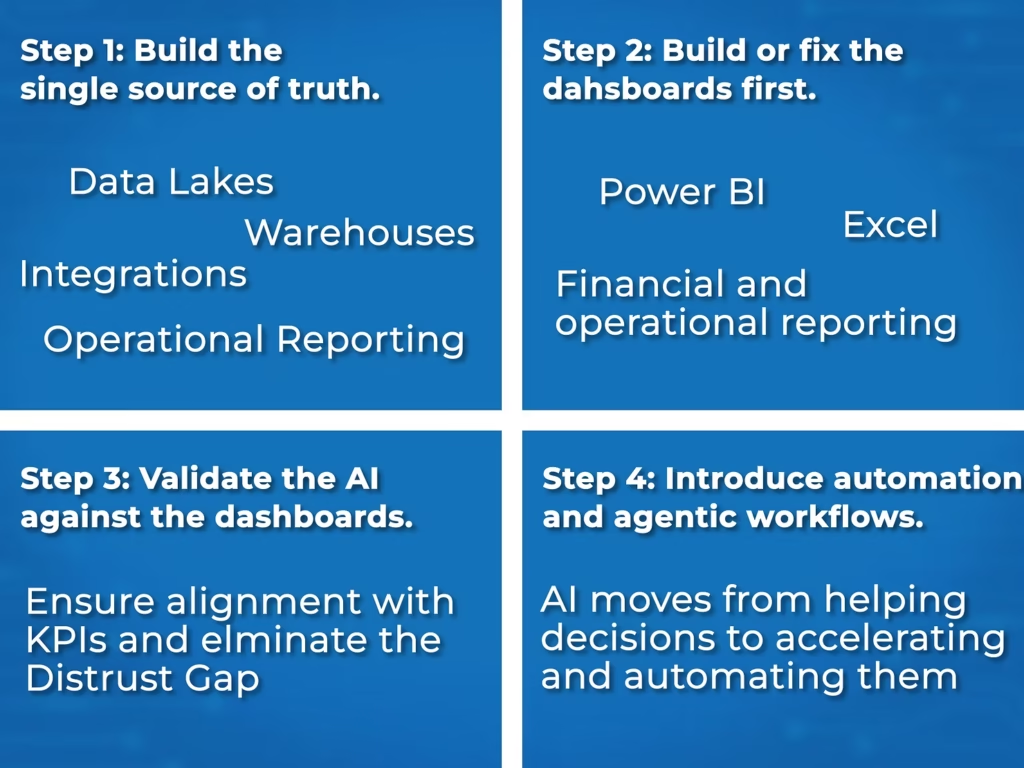
1. They start with a solid data foundation
Before building anything AI-driven, successful teams create:
- clean and structured data sources
- integrated systems (ERP, CRM, POS, finance)
- unified schemas
- reliable governance standards
This becomes a “single source of truth” the entire business can trust.
2. They establish validated, credible data first
Before expecting the AI to be accurate, they make sure the business has accurate foundational data.
This means automating or fixing:
- Power BI reports
- Excel operational sheets
- Revenue, margin, and finance dashboards
- Performance and operational KPIs
If these aren’t reliable, AI has nothing to benchmark against.
3. They validate AI against the business’s numbers
Instead of evaluating models using only statistical metrics, the successful 5% check whether outputs align with the company’s reality.
They confirm:
- AI matches the official KPIs
- numbers align with the reporting sources executives trust
- insights make sense in context
- the system understands the business, not just the prompt
This eliminates the Distrust Gap before it appears.
4. Only after trust is established, they automate workflows
Once the AI proves it can match the business’s truth, they build more advanced capabilities such as:
- automated reports
- anomaly detection
- pricing recommendations
- financial insights
- demand forecasting
- agent-driven operational decisions
At this stage, AI becomes a source of efficiency and savings.
Why Sisifo’s Approach Works
Sisifo Analytics uses a practical and modular process that mirrors the playbook of the successful 5%.
Each company can enter at any stage, depending on what they already have:
The Bottom Line
Companies don’t need another chatbot.They need AI systems that are connected to their real data, workflows, and decision-making processes.
The organizations that succeed with AI are the ones that start with a single real workflow, use their actual data from day one, define one measurable outcome, test a small version with real users, and only scale once that pilot proves real workflow change.
Wrappers fail. Integrated, data-grounded ai systems win. That’s how enterprises move from prototypes to real ROI.