

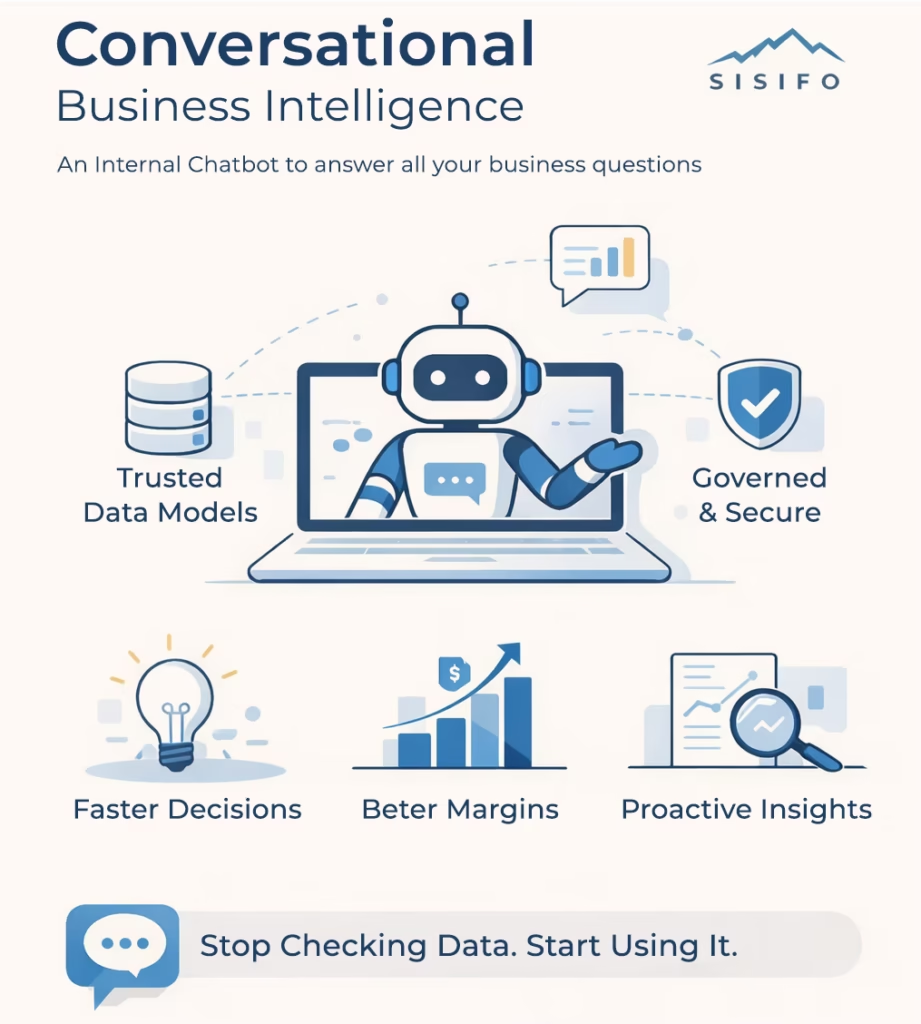
Conversational Business Intelligence (BI) helps teams interact with data using natural language while still getting answers grounded in real business rules. Instead of digging through dashboards or waiting on analysts, executives, sales teams, and operators can ask clear questions through a chatbot and receive answers immediately.
Sisifo’s Conversational BI connects directly to trusted data models, existing BI tools, and governed data lakes. The result uses the same definitions, metrics, and logic the business already relies on.
Why Traditional BI Slows Decision-Making
Most analytics systems were designed for analysts, not for the people making decisions throughout the day.
- Executives depend on reports that summarize the past.
- Sales teams rely on intuition or outdated reports.
- Inventory planners juggle spreadsheets, ERPs, and forecasts.
- Operations teams respond after problems appear instead of before.
“Chat with your data” tools promise to fix this gap, but many fall short. Translating a question into SQL is not enough. Without understanding pricing rules, demand patterns, lead times, customer behavior, or commercial strategy, answers may be technically correct while still being useless in practice.
Businesses do not need faster queries. They need answers that reflect how the business actually works.
How to set up Conversational BI Successfully?
Conversational BI is not about replacing dashboards with chat interfaces. It is about making analytics usable at the moment decisions are made.
Sisifo’s Conversational BI is designed as an operational decision assistant, not a chatbot layered on top of data. It works because it is anchored in three core foundations:
1. Business-Defined Data Foundations
Before any conversation happens, the business logic is made explicit.
This includes understanding which products should be pushed versus protected, how demand behaves by client and season, how margins and discounts apply, and how lead times interact with stock policies and historical consumption.
By modeling these rules upfront, the assistant reasons using the same logic the organization already trusts. This prevents mismatches between AI answers and what teams see in their dashboards or financial reports.
2. Context and Role Awareness
The integrated architecture gives the assistant awareness of who is asking the question and what decision they are trying to make.
A salesperson asking what to sell to a specific client receives recommendations based on purchase history, margin impact, available stock, and delivery constraints.
An inventory planner asking which products to prioritize receives insights on slow-moving stock, overstock risk, historical demand trends, and actions aligned with commercial strategy.
A supply chain team asking what to buy now receives lead-time-adjusted forecasts, risk indicators, and purchase recommendations tied to supplier performance.
Each role gets answers aligned to its decision horizon, not raw data or generic summaries.
3. Governed Queries With Clear Explanations
Natural language questions are converted into structured queries, but always within guardrails.
- Queries run against approved models.
- Security and access rules are enforced.
- Sensitive data is protected.
- Every recommendation includes an explanation of why it was made.
The system does not guess. It reasons within defined business boundaries so teams can trust the output.
The Business Impact of Conversational BI
When Conversational BI is implemented correctly, analytics shift from periodic reporting to daily decision support.
- Sales teams walk into meetings knowing what to sell and why.
- Inventory teams balance stock and demand proactively.
- Operations teams anticipate issues instead of reacting to them.
- Executives explore scenarios without waiting for analysis cycles.
This leads to faster decisions, better margins, lower inventory risk, and wider adoption of analytics across the organization. Most importantly, data stops being something people check and becomes something they actively work with.
Closing Thoughts
Conversational BI is not about talking to data. It is about acting with confidence. Conversational BI enables teams to engage with data in the language of their roles while staying aligned with governance, security, and business reality.
This is what “chat with your data” looks like when it actually works.